In Ghana, girls miss school every month not because they aren't brilliant, not because they don't want to be there, but because a combination of forces conspire against them simultaneously — product access, unmanaged pain, unsafe bathrooms, and cultural stigma, all at once. No single intervention fixes that. This initiative doesn't try to find one. It builds the whole ecosystem.

Two peer-reviewed, Ghanaian-led studies
Most period poverty interventions assume the barrier is simply pad access. The research says otherwise — and it comes from Ghana studying itself, not an outside read on the problem.
The leading cause of absenteeism isn't pad access — it's menstrual pain and discomfort, followed by inadequate WASH infrastructure. Pad access ranks third.
53% of girls with reliable pad access still missed school due to painBoys expressed genuine desire to support female peers and future daughters — they simply don't know how. Cultural taboos are shifting but not gone, and gatekeepers specifically recommended tax reduction on menstrual products.
Because the problem is a system, not a single gap
Government-funded menstrual product distribution in Ghanaian public schools, across all flow types — not just light to medium. Paired with a policy push to eliminate the 20% luxury tax on menstrual products, making them affordable outside school too. Treated like textbooks. Treated like school meals. Not charity. Infrastructure.
Functional, private, gender-sensitive WASH infrastructure in every partner school — private changing cubicles, clean water access near toilet facilities, waste disposal for menstrual products, and school-based health stations with trained health officers and accessible pain relief.
Menstrual health education that reaches girls before their first period. Stigma reduction programs that include boys, fathers, and male teachers — the research shows boys want to help and just need the language and permission to do so. Community and religious leader engagement across Muslim and Christian communities. The silence isn't protective. It's harmful. We break it with education, not shame.
Tutoring support and academic catch-up for days missed. Mentorship that keeps girls connected to their school community through their menstrual years — because access without academic support just means a girl who stayed in school but fell behind anyway.
Scholarships, professional mentorship, and connections to opportunity anchored in the Ghanaian diaspora — proof that the girl studying by an oil lamp isn't dreaming too big, backed by the networks to make good on it.
Three asks, not one
Government funding of menstrual products as a standing line item in the national education budget — the same way textbooks and school meals already are.
Elimination of Ghana's 20% luxury tax on menstrual products, making them affordable beyond school distribution too.
Mandated WASH infrastructure standards in all public schools — rehabilitating what already exists rather than building new facilities from scratch.
Honey Pot funds and campaigns. A purchase-to-impact model connects the American consumer directly to a girl in Accra.
Black Girl Vitamins brings menstrual pain management credibility and a co-branded product, Flow Relief, that funds health station stocking in partner schools.
Ghanaian pharmacy networks — Ernest Chemist, Drugfield Pharmaceuticals — provide sustainable local distribution for pain management beyond the initiative's direct funding.
Ghanaian NGO partners own community relationships, cultural competency, and ground-level delivery. This was never a story about saving. It's about resourcing.
The Ghanaian diaspora advocates, mentors, gives, and bridges — the connective tissue between the consumer and the government this policy ask depends on.
Creative concept, campaign direction, and visual worldbuilding by Shannon — visuals generated with the assistance of AI.
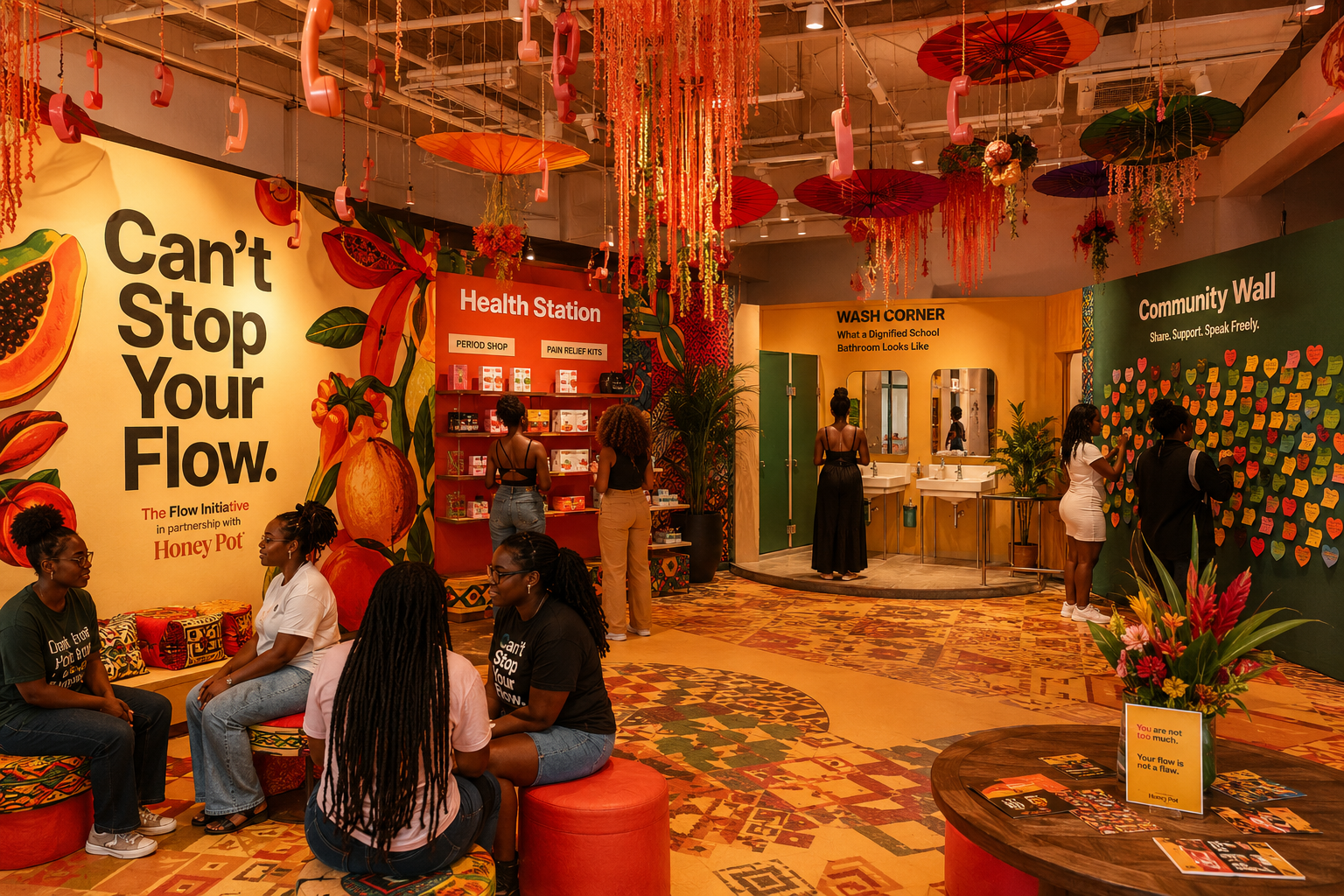
A Health Station, a dignified Wash Corner modeling what rehabilitated school infrastructure looks like, and a Community Wall for shared stories — the ecosystem made physical.
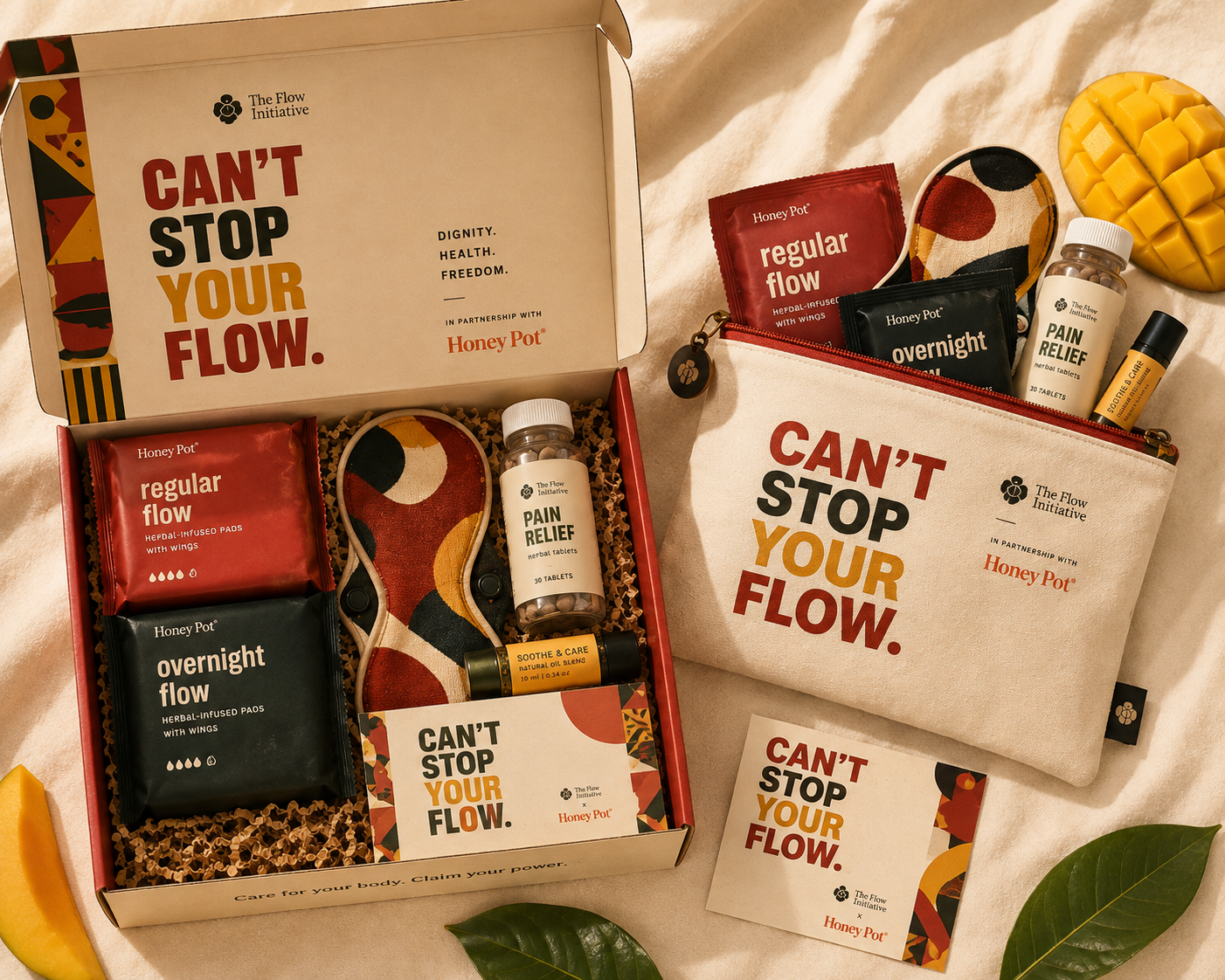
Pads across flow types, pain relief, a natural oil blend, and a reusable pouch — a stocked, dignified alternative to the rags and tissue paper the research found girls resorting to.
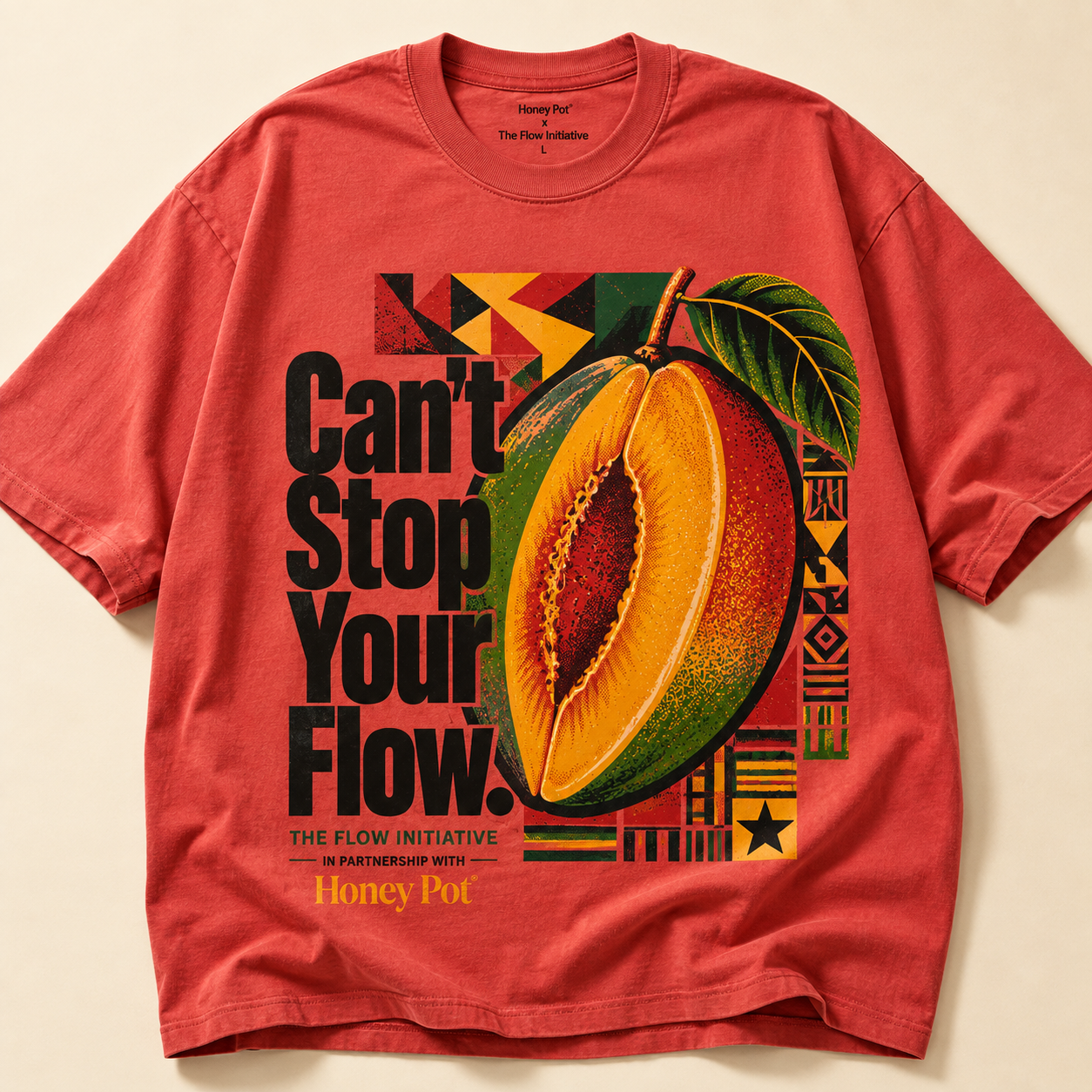
Awareness apparel built to travel past the initiative itself, carrying the message into everyday wear.
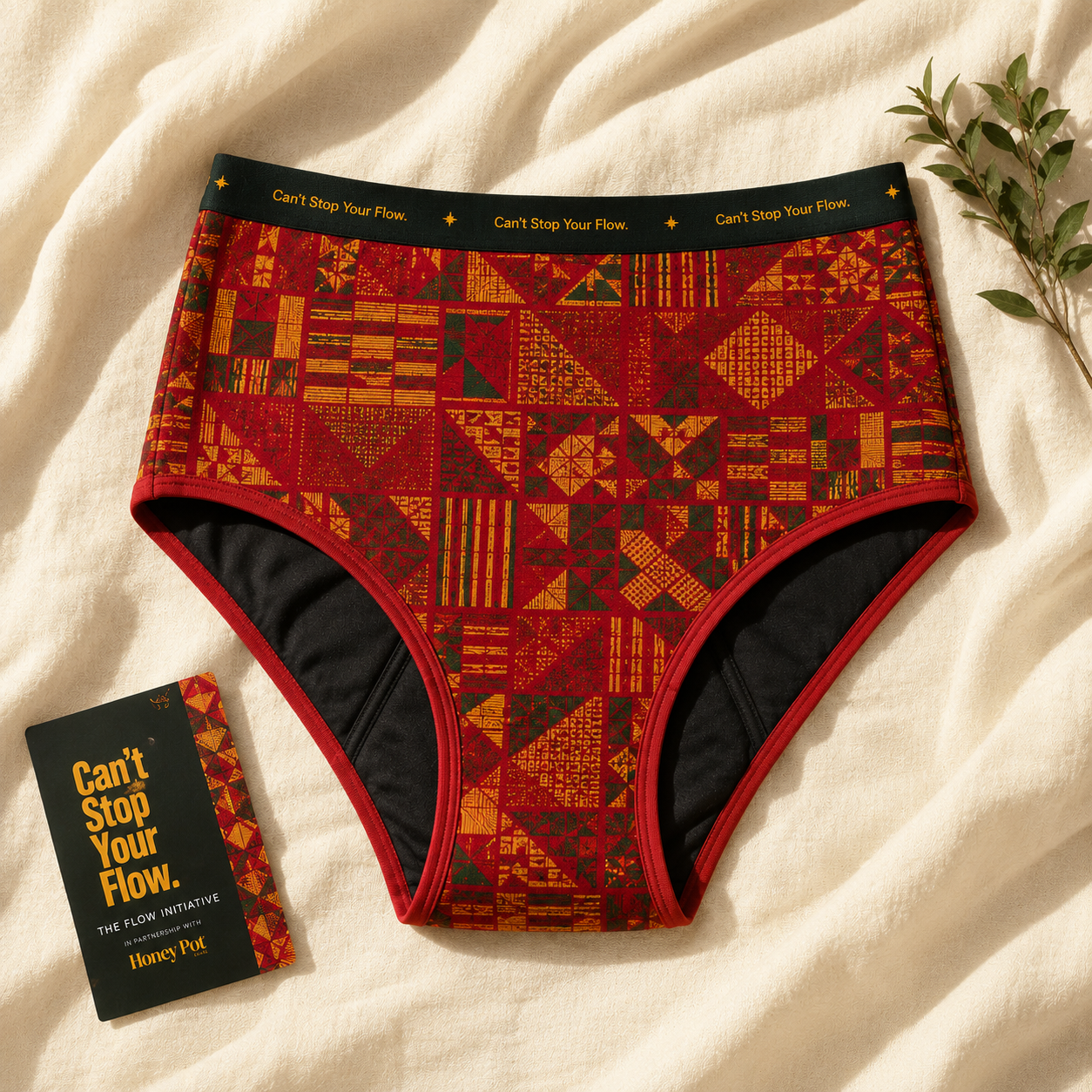
Custom-patterned period underwear — dignity woven into something someone actually wants to wear.